
A building automation team needed Allen-Bradley EtherNet/IP PLC data exchanged with a BACnet/IP environment, but live commissioning exposed heartbeat timeout alarms driven by EMS expectations rather than a broken gateway. Chipkin QuickServer delivered the EtherNet/IP to BACnet/IP protocol conversion path and helped the team settle on a more realistic heartbeat strategy for the EMS/BMS handoff.
This case is useful because the protocol gateway was already doing the core job. The real issue appeared after the EtherNet/IP to BACnet/IP integration moved into live operation, when the EMS side treated normal BACnet polling behavior like a communications fault.
At a Glance
- Industry: Building automation / EMS-BMS integration
- Customer: Mechanical and controls integration team
- Facility type: Commercial energy-management integration project
- Client role: Engineering and commissioning stakeholders
- Project scale: Dual EtherNet/IP PLC networks presented to a BACnet/IP building system
- Protocols: From: EtherNet/IP -> To: BACnet/IP
- Chipkin product: Chipkin QuickServer QS-2xxx series
- Project start: October 2024
- Internal reference: FSE20031
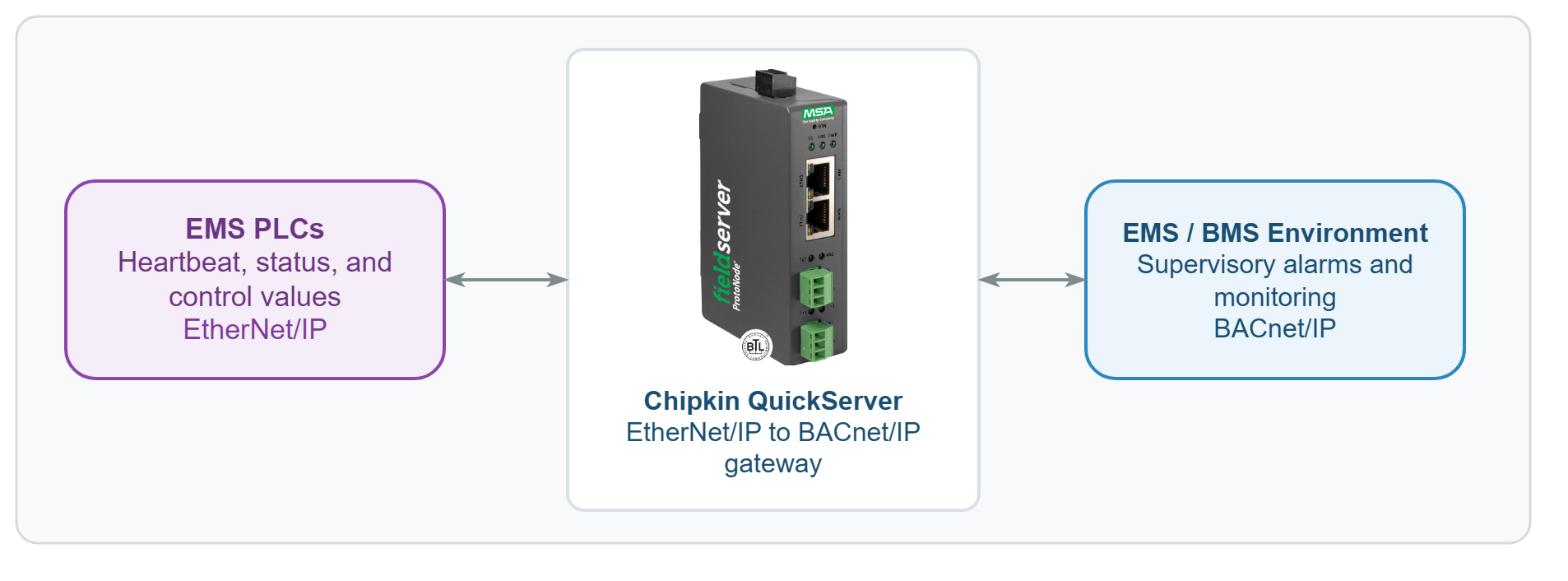
EtherNet/IP PLCs -> EtherNet/IP -> Chipkin QuickServer -> BACnet/IP -> EMS/BMS environment
EtherNet/IP to BACnet/IP Challenge
The project connected upstream EtherNet/IP PLC data from Allen-Bradley controllers to a downstream BACnet/IP building management environment. The protocol conversion itself worked, but once the integration reached a live EMS/BMS workflow, the team began seeing heartbeat timeout alarms.
The key issue was not broken communications. The Allen-Bradley EtherNet/IP data was moving through the QuickServer and reaching the BACnet/IP side correctly. The problem was that the EMS logic expected the heartbeat to update inside a 10-second window, while real BACnet polling behavior could occasionally exceed that threshold.
That made this a timing-and-expectations problem rather than a gateway fault. In mixed PLC and BACnet environments, that difference often decides whether a commissioning project calms down quickly or stays noisy even after the protocol gateway is online.
Why Chipkin for EtherNet/IP to BACnet/IP Integration
This project needed more than a one-time file handoff. The customer needed a working EtherNet/IP to BACnet/IP bridge plus a support team that could explain how BACnet polling behavior would actually look in an EMS workflow once the project went live.
Chipkin fit because the QuickServer platform handled the EtherNet/IP to BACnet/IP gateway role, while Chipkin support helped the customer distinguish a real communications failure from a heartbeat policy that was too aggressive for a polled BACnet environment.
The Solution: QuickServer EtherNet/IP to BACnet/IP Bridge
Chipkin configured QuickServer to expose the required Allen-Bradley PLC data from EtherNet/IP into the BACnet/IP environment. That gave the team a working protocol conversion path between the PLC-facing controls layer and the building-side EMS/BMS workflow.
When heartbeat alarms appeared, Chipkin helped reframe the issue around network behavior instead of assuming the gateway needed to be rebuilt. The useful outcome was not just that the EtherNet/IP to BACnet/IP handoff stayed operational. It was that the commissioning team left with a heartbeat strategy aligned to real BACnet polling behavior.
For another EtherNet/IP deployment, see the EtherNet/IP to BACnet/IP PLC Alarm Integration case study.
EMS/BMS Integration Results
The project delivered a working EtherNet/IP to BACnet/IP integration path for the EMS/BMS environment.
Project proof points:
- Bidirectional communications were confirmed between the PLC-facing and BACnet-facing sides of the integration.
- The gateway configuration remained technically sound after live heartbeat alarms were reported.
- The root cause was narrowed to timing expectations instead of a protocol conversion failure.
- The commissioning team left with a clearer heartbeat strategy for stable live-system behavior.
The final closeout was practical:
“The BACnet side is stable now that we’ve adjusted the heartbeat expectations. Good to close this out.”
— Controls technician, EMS/BMS integration team
Have a Similar PLC-to-BMS Integration Project?
Need to move EtherNet/IP data into a BACnet/IP environment and avoid commissioning surprises around polling or heartbeat timing? Chipkin can help with QuickServer configuration, protocol conversion, and troubleshooting support for PLC-to-BMS integrations. Tell us about your project.
Frequently Asked Questions
Can QuickServer convert EtherNet/IP to BACnet/IP?
Yes. QuickServer can be used as an EtherNet/IP to BACnet/IP protocol gateway. In this deployment, Chipkin used that path to expose PLC data to an EMS/BMS environment.
Why would heartbeat alarms appear if the EtherNet/IP to BACnet/IP gateway is working?
In mixed controls environments, the gateway can be working while the downstream EMS logic still expects faster updates than a polled BACnet workflow normally delivers. That was the main issue in this project.
Can Chipkin help tune BACnet-side expectations during commissioning?
Yes. This case study is a good example of Chipkin supporting the commissioning phase after the core protocol conversion was already online, helping the team align heartbeat logic with real system behavior.