What Simplex 4100 / 4100ES Is
Simplex 4100 and 4100ES are fire alarm control panel families commonly integrated into supervisory systems through a gateway. Their practical value is exposing alarm, trouble, and supervisory states without replacing the installed fire system, but success depends on panel-side serial validation and realistic downstream point expectations.
For field-level diagnostic workflow, use the Simplex 4100 Troubleshooting Guide.
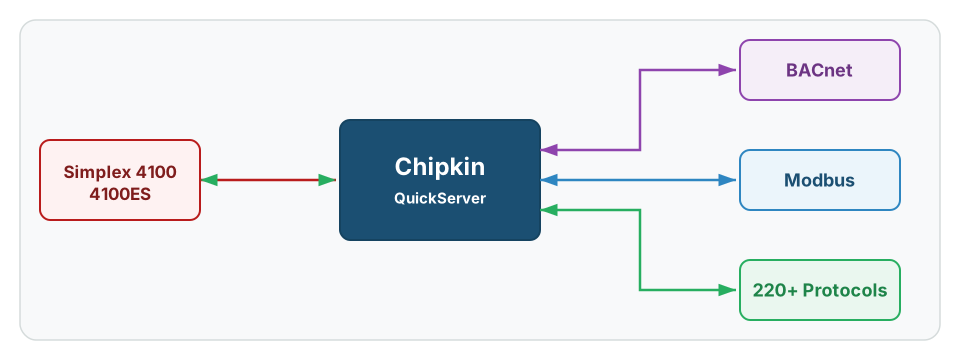
See QuickServer for Simplex protocol conversion options
History
Simplex 4100-family integrations matter because many sites want supervisory visibility from existing fire infrastructure without changing panel ownership. In Chipkin evidence, these projects are workable, but only when panel-side readiness is verified explicitly.
That history matters because the source of truth is not the gateway. It is the panel technician, the Port B path, and the confirmed data-vectoring behavior on the live system.
Core Concepts
Simplex 4100 projects usually depend on:
- Panel-side serial verification
- Reliable point and event scope
- Correct destination-side point model
- Clear distinction between fire-panel data and supervisory presentation
Simplex-Specific Information
Public guidance for Simplex can stay field-proven, but it needs hard startup gates around family identification and panel-side ownership.
Panel-Side Risk Areas
| Area | Why It Matters | Common Failure Mode |
|---|---|---|
| Family identification | Determines the real panel context | The project starts from a broad Simplex label instead of the installed family |
| Port B and data vectoring | Hard gate for source availability | Gateway work starts before the panel output is actually confirmed |
| Point and event list quality | Defines usable scope | The panel is reachable, but the target cannot use the resulting data cleanly |
| Named panel-side ownership | Required for real coordination | The gateway team is expected to solve panel-side prerequisites alone |
Common Variants
| Variant | Where It Fits | Why It Matters |
|---|---|---|
| Simplex 4100 Family | Base family identification | Needed before scoping the rest of the work |
| Simplex 4100ES | Key family variant | May change field assumptions and startup detail |
| Simplex Port B Data Vectoring | Panel-side communications gate | Required before treating the project as integration-ready |
How To Get The Points List
For Simplex, the points list should come from the current panel-side export, event scope, and named field-owner confirmation that the output path is enabled.
Preferred sources:
- Exact panel family identification
- Current point and event list from the panel-side team
- Port B and data-vectoring confirmation
- Existing supervisory graphics or alarm schedules where available
Devices that Support Simplex 4100 / 4100ES
QuickServer guidance here should remain tied to verified 4100-family panels with explicit panel-side readiness. It should not imply generic fire-panel interchangeability.
Common Integration Targets
- BACnet for BMS-side alarm and supervisory visibility
- Modbus for SCADA and register-based integrations
- EtherNet/IP for PLC-oriented downstream environments
Tools & Diagnostics
| Tool | Type | Description |
|---|---|---|
| QuickServer | Protocol gateway | Normalizes Simplex 4100-family event data into BACnet, Modbus, EtherNet/IP, and many other downstream protocols |
| FieldServer Toolbox | Gateway diagnostics | Useful for validating downstream point exposure once panel-side readiness is established |
| Panel-side technician validation | Source readiness | Required for Port B and data-vectoring confirmation |
| Point and event lists | Scope control | Useful for defining the downstream supervisory model |
Frequently Asked Questions
What is the first gate on a Simplex 4100 project?
Panel-side confirmation that the required output path is available. Without that, the job is still in intake, not integration.
Why is the panel technician explicitly part of the process?
Because the gateway cannot create Port B or data-vectoring behavior on its own. The source-side owner has to confirm readiness.
Can a good point list replace panel-side serial validation?
No. Both are required. A good list without a live source path is still incomplete.
Reference Documents
- Simplex 4100 driver manual - Driver and integration reference for Simplex 4100-family gateway work.