
What BACnet MS/TP Is
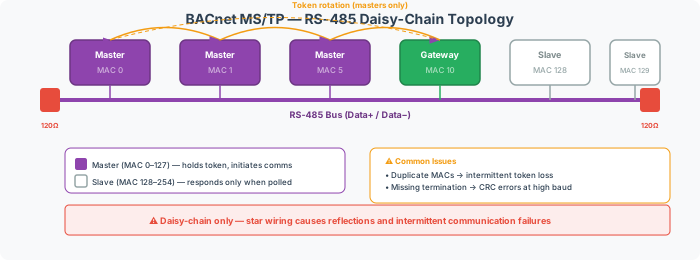
BACnet Master-Slave/Token-Passing (MS/TP) is a serial network layer for BACnet that runs over RS-485. A logical token rotates among master devices; only the device holding the token may initiate communication. Slave devices respond only when polled.
MS/TP is the standard transport for field-level controller trunks in building automation.
Key Parameters
| Parameter | Range | Notes |
|---|---|---|
| Baud rate | 9600–115200 | All devices on a trunk must match |
| MAC address | 0–127 (masters), 128–254 (slaves) | Must be unique per trunk |
| Max Masters | 1–127 | Highest master MAC the token algorithm polls |
| Max Info Frames | 1–255 | Messages sent per token hold |
Wiring Requirements
MS/TP uses a daisy-chain RS-485 bus topology. Key rules:
- Two wires (Data+ / Data−) plus signal ground
- Termination resistors (120Ω) at both physical ends of the bus
- Maximum trunk length ~1200 m (4000 ft) at 76800 baud
- No star or stub wiring — stubs cause signal reflections
[!CAUTION] Duplicate MAC addresses produce intermittent token-passing failures that look random at the supervisory layer. Always verify MAC uniqueness before commissioning.
Common Issues
- Wrong baud rate — single mismatched device disrupts the entire trunk
- Duplicate MACs — causes token loss and intermittent communication
- Max Masters set too low — excludes higher-addressed devices from token rotation
- Missing termination — signal reflections cause CRC errors at higher baud rates