
A building systems integrator needed a Siemens fire alarm environment exposed to BACnet/IP for supervisory visibility. Chipkin gateway support helped turn an XNET-based Siemens XLS / Cerberus integration into a working BACnet/IP presentation after the project moved through configuration updates and a long customer testing window.
The value of this project was not just that communication became possible. The customer needed confidence that the selected fire alarm points would remain usable on the BACnet side after testing was complete, which meant the gateway delivery had to hold up through a real validation cycle rather than a quick bench demo.
At a Glance
- Industry: Fire alarm / life-safety integration
- Location: Canada
- Customer: Building systems and fire safety integrator
- Facility type: Commercial fire alarm visibility project
- Client role: Project management and fire alarm specialists
- Project scale: Multi-revision Siemens fire alarm integration with extended final testing
- Protocols: From: Siemens XLS / Cerberus over XNET -> To: BACnet/IP
- Chipkin product: Chipkin gateway for Siemens fire-panel integrations
- Project start: February 2023
- Internal reference: FSE15903
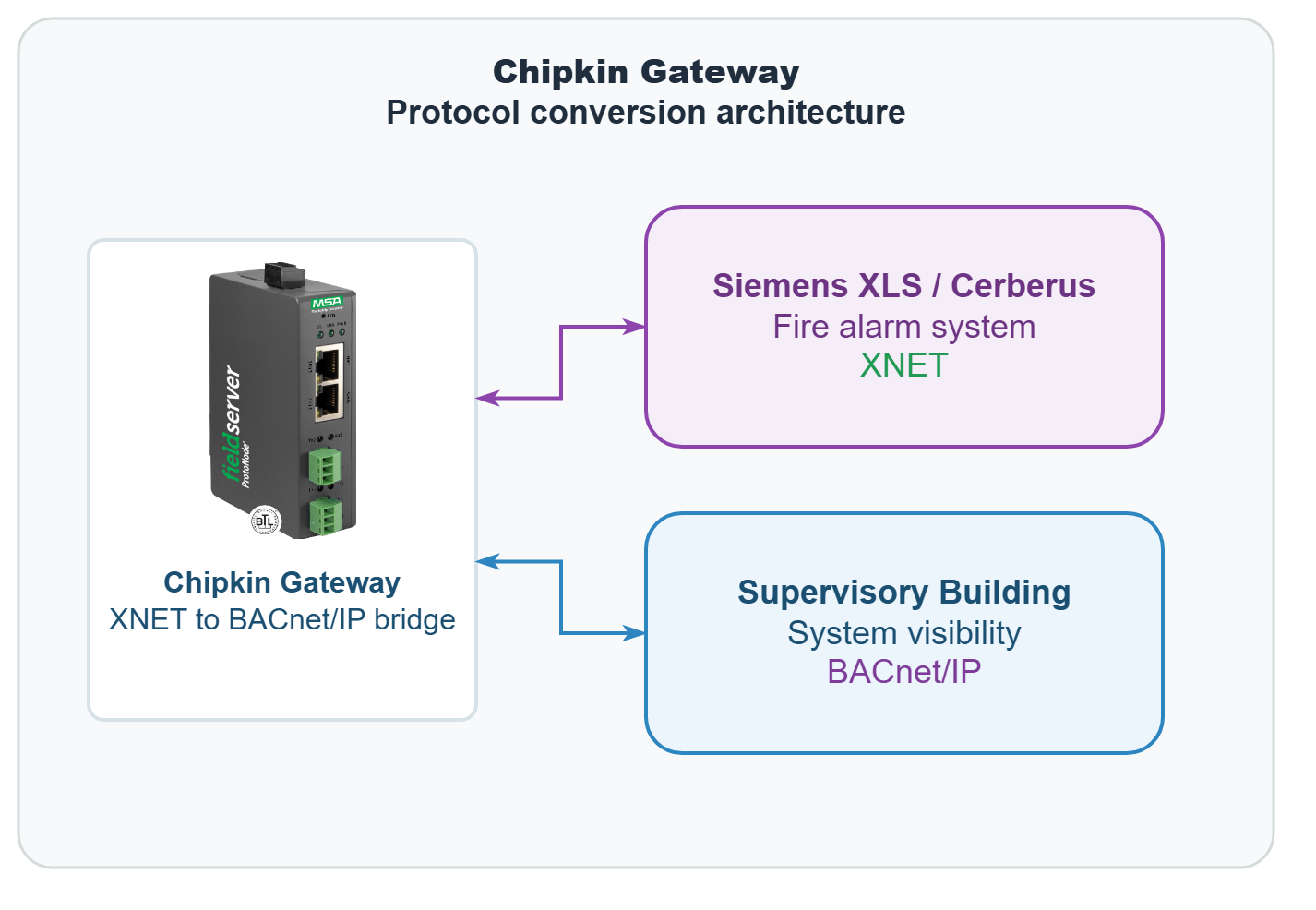
Architecture: Siemens XLS / Cerberus fire alarm system -> XNET -> Chipkin gateway -> BACnet/IP -> supervisory building system
Siemens XLS / Cerberus to BACnet/IP Challenge
The upstream/server side was a Siemens fire alarm system in the Siemens XLS / Cerberus family using an XNET-based integration path. The downstream/client side needed a BACnet/IP representation that could bring selected fire alarm points into the broader supervisory environment.
That kind of project is harder than a simple protocol label suggests. Siemens fire-panel work depends on family identification, source-side point quality, and careful agreement about what will actually be surfaced downstream. The integration also had to stay stable through a customer-led test schedule that stretched the overall calendar without changing the technical goal.
In practice, the challenge was to make the BACnet side useful enough for real building visibility while preserving the installed fire alarm environment and working within the customer’s testing cadence.
Why Chipkin
This was a strong fit for Chipkin because the project sat at the intersection of fire-system integration and BACnet delivery. Chipkin contributed both the gateway path and the support workflow needed to refine the configuration until the customer was satisfied with the final point behavior.
That is where specialized gateway experience matters. Fire-panel projects often succeed or fail on the details of source-family handling, point presentation, and test coordination rather than on generic network connectivity alone.
The Solution
Chipkin configured the gateway to translate the Siemens source data into BACnet/IP and supported the customer through the revision and testing cycle until the selected points were behaving correctly. The project included the communication settings and iterative updates needed to move the BACnet presentation from provisional to field-verified.
The decisive factor was staying with the job through the validation period. Instead of assuming the first delivered configuration was the end of the work, Chipkin continued refining the handoff until the customer could confirm the remaining testing was complete.
That produced a public-safe success story: an installed Siemens fire alarm environment remained in place while the required data became visible on the BACnet/IP side.
For another fire alarm project that extended panel visibility into BACnet/IP without replacing the installed source system, see the Gamewell FCI-E3 to BACnet/IP Fire Alarm Integration case study.
Fire Alarm Visibility Results
The project delivered a working Siemens XLS / Cerberus to BACnet/IP integration path for a fire alarm visibility deployment.
Project proof points:
- The Siemens fire alarm points were exposed to BACnet/IP through a Chipkin gateway workflow.
- Multiple configuration adjustments were completed as customer testing progressed.
- The final validation window closed successfully with the remaining points confirmed working.
- The integration preserved the installed fire system while extending downstream supervisory visibility.
The customer’s final confirmation captured the outcome clearly:
“We have just completed the remaining testing today and have all points working now.”
— Project manager, building systems integrator
Have a Similar Siemens Fire Alarm Integration?
Need to expose Siemens XLS / Cerberus data to a BACnet/IP supervisory system without replacing the installed fire platform? Chipkin can help with gateway configuration, point-presentation planning, and support through the final validation cycle. Tell us about your project.
Frequently Asked Questions
Can Chipkin expose Siemens XLS or Cerberus data to BACnet/IP?
Yes. This project used a Chipkin gateway workflow to bring selected Siemens fire alarm points into a BACnet/IP supervisory environment.
Does Chipkin support the project through customer testing?
Yes. The delivery here depended on staying engaged through a long customer testing window until the remaining points were confirmed working.
What source-side information matters on a Siemens fire-panel integration?
Family identification, point scope, and agreement about what should be exposed downstream all matter. That is why this case study emphasizes source-family handling and validation discipline rather than only the protocol labels.