What Siemens SBT-FSI Is
Siemens SBT-FSI is a Siemens interface used in fire-system and building integrations where Siemens-side data must be exposed to a supervisory platform without replacing the installed source environment. Its primary practical advantage is an established path for bringing Siemens-origin data into external monitoring or control systems while preserving the installed panel context.
Siemens SBT-FSI belongs in Siemens fire-system and related supervisory integrations where the site needs downstream visibility in protocols such as BACnet or Modbus. Current Chipkin evidence supports field-proven public coverage, but the guide should still keep questionnaire discipline, 19200/7E1 serial assumptions, scope volatility, and multi-party intake requirements explicit.
For field-level diagnostic workflow, use the Siemens SBT-FSI Troubleshooting Guide.
See QuickServer for Siemens fire-system protocol conversion options
History
SBT-FSI remains relevant because Siemens fire and building environments often need a controlled handoff of source data into external supervisory platforms without replacing the installed Siemens source side. That makes SBT-FSI practical in sites that need visibility, migration, or integration rather than wholesale panel replacement.
In Chipkin terms, SBT-FSI has stronger public evidence than the broader Desigo/APOGEE retrofit story, but it still requires disciplined intake. Successful projects depend on proving the exact family, collecting the right questionnaire and point export, and keeping source-timing expectations realistic.
Core Concepts
Siemens SBT-FSI projects usually depend on:
- Protocol-family confirmation: the project has to confirm it is really SBT-FSI and not another Siemens family.
- Serial-profile accuracy:
19200/7E1is a recurring practical baseline that should be verified early. - Questionnaire completeness: source-side engineering data and point exports need to be gathered before mapping.
- Listener-versus-polling expectations: event timing often follows the upstream Siemens behavior rather than customer assumptions.
- Scope agreement: “map all components” versus “map only required points” changes the whole delivery shape.
Siemens SBT-FSI-Specific Information
Serial Behavior And Source Interface Assumptions
The most repeatable SBT-FSI startup issue is simple but critical: teams assume serial settings instead of confirming them. Current public evidence makes 19200/7E1 a strong default intake checkpoint, even though site-specific validation still matters.
That makes the serial profile part of the protocol story, not just a configuration footnote. If the serial path is wrong, everything downstream becomes noise.
Passive Listener Expectations
SBT-FSI projects also require realistic timing expectations. Some complaints that sound like protocol failure are really event-model misunderstandings. The gateway may be behaving correctly while the upstream Siemens side controls when changes become visible.
This is why public SBT-FSI wording should explicitly discuss passive-listener behavior and event timing instead of treating every delay complaint as a transport fault.
Intake And Scope Discipline
SBT-FSI jobs can still fail quietly even when communication is healthy. The usual cause is incomplete intake or vague scope: the customer expected every point, while the engineering team mapped only a smaller agreed set. That makes questionnaire quality and point-export completeness central to delivery.
The correct public framing is field-proven but disciplined. Even on repeatable SBT-FSI work, structured intake remains one of the main predictors of whether the build will commission cleanly.
Common Variants
| Variant | Where It Fits | Why It Matters |
|---|---|---|
| Standard SBT-FSI supervisory handoff | Sites exposing Siemens data into BAS or monitoring workflows | Best fit for the field-proven public story |
| Passive-listener timing-sensitive workflow | Sites sensitive to alarm update timing | Requires clear expectation-setting about upstream event behavior |
| Broad-scope versus selected-point delivery | Sites deciding how much of the Siemens point model to expose | Scope agreement becomes a technical and commercial gate |
How To Get The Points List
For Siemens SBT-FSI, point lists usually come from the Siemens-side questionnaire, point export, and a clearly agreed statement of which components or point families must be mapped.
Preferred sources:
- Confirmed SBT-FSI project identification
- Source-side point export or equivalent engineering data
- Documented serial-interface expectations for the installed source
- Explicit list of required points, naming rules, and downstream expectations
The most useful intake package confirms the protocol family first, then collects serial details, point exports, and a scope decision before mapping begins.
Devices that Support Siemens SBT-FSI
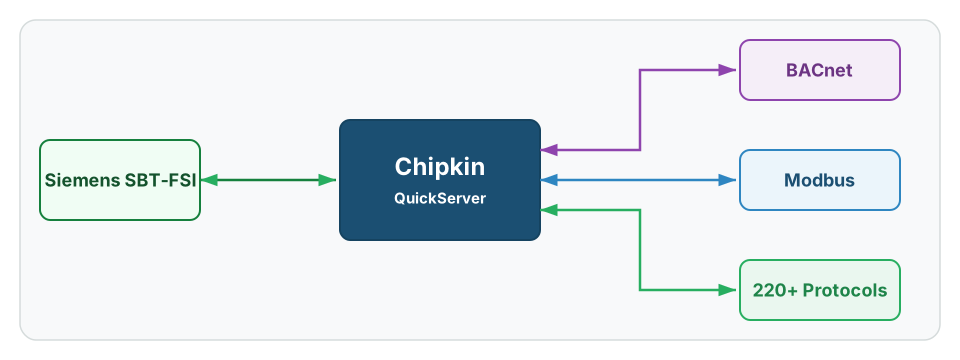
QuickServer is Chipkin’s primary gateway platform when Siemens SBT-FSI data needs to be normalized into BACnet, Modbus, or another supervisory protocol.
Representative contexts include fire-system supervisory integrations, Siemens-to-BAS visibility projects, and downstream monitoring workflows that need structured access to installed Siemens data.
Common Integration Targets
- BACnet for BMS-side visibility and supervisory integration
- Modbus for register-based SCADA interoperability
Tools & Diagnostics
| Tool | Type | Description |
|---|---|---|
| QuickServer | Protocol gateway | Normalizes Siemens SBT-FSI data into BACnet, Modbus, and many other downstream protocols |
| FieldServer Toolbox | Gateway diagnostics | Useful for proving the source serial path before downstream object review |
| CAS BACnet Explorer | BACnet validation tool | Useful when the gateway is receiving source data and the destination side still needs verification |
| Siemens questionnaire and point export | Intake artifact | Useful for aligning scope, source identity, and downstream naming before configuration work starts |
Frequently Asked Questions
Is Siemens SBT-FSI field-proven in current public guidance?
Yes, but the guide should still keep questionnaire discipline and serial intake explicit rather than presenting it as effortless plug-and-play support.
Why is 19200/7E1 mentioned so often on SBT-FSI jobs?
Because it is a recurring practical baseline and one of the easiest ways to prevent wasted troubleshooting on the wrong serial profile.
Why do SBT-FSI customers complain about delay when the gateway is working?
Because the upstream Siemens event behavior may control when changes become visible, which is different from a polling-based expectation.
What is the most common SBT-FSI project-management mistake?
Starting configuration before the questionnaire, point export, and scope agreement are complete.
Reference Documents
- Siemens Buildings - Official manufacturer context for Siemens building and fire-system integration environment.