What OPW Is
OPW is a fuel-system and tank-gauge integration context, especially around Integra 100 consoles that must expose inventory, alarm, and probe data into a supervisory workflow. Its primary practical advantage is access to fuel-site inventory and alarm information in a way that upstream building or monitoring systems can consume.
OPW belongs in fuel and tank-monitoring environments where tank, probe, and alarm data have to move into supervisory or reporting systems. In practice, current Chipkin evidence is strongest where the installed console behaves like a Veeder Root-style TLS-family source and the serial wiring has been validated carefully, so the public framing should stay real but narrow.
For field-level diagnostic workflow, use the OPW Troubleshooting Guide.
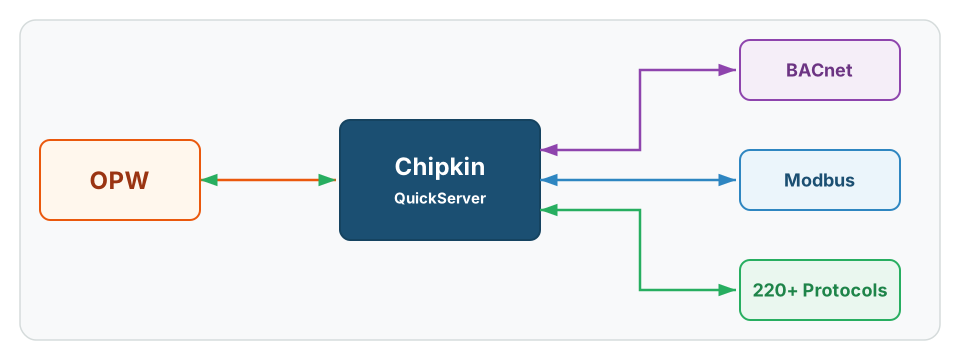
See QuickServer for OPW supervisory protocol conversion options
History
OPW remains relevant in sites where tank-gauge and fuel-monitoring systems still need to exchange operational data with building, facilities, or reporting platforms. That history matters because many OPW jobs are not broad generic protocol stories. They are model-sensitive integrations centered on specific console behavior, wiring reality, and compatibility expectations.
In public Chipkin terms, OPW should stay grounded in Integra 100 and closely related workflows rather than being described as universal OPW protocol coverage. Similarity to Veeder Root can help frame the job, but it should never be treated as guaranteed equivalence.
Core Concepts
OPW projects usually depend on:
- Console identity: exact model and interface type matter before any mapping assumptions are trusted.
- RS-232 wiring discipline: the serial pinout and actual field wiring are hard gates, not minor setup details.
- Compatibility reality: some projects rely on TLS-350 style expectations, but those expectations need to be proven instead of copied blindly.
- Fuel-site inventory quality: tank, probe, and alarm schedules still define whether the map is meaningful.
- Narrow support framing: public guidance should stay grounded in model-specific, wiring-sensitive real work rather than generic OPW claims.
OPW-Specific Information
Integra 100 And Console-Specific Scope
The strongest public OPW framing should stay tied to Integra 100 and closely related console workflows. That matters because many project failures begin when the team says only “OPW” and assumes every console exposes the same data families, compatibility modes, or serial behavior.
The result is that a reused template can look reasonable while still describing the wrong console behavior. Good OPW intake starts by proving the exact console model, then asking whether the live source really behaves like the assumed compatibility path.
RS-232 Wiring And Pinout Reality
Wiring is one of the decisive OPW topics. Conflicting RS-232 guidance is common enough that copied generic serial diagrams should not outrank site-verified wiring. A console may be the right family and still fail completely because the physical serial path was described incorrectly.
This is why OPW guides need to keep the wiring story explicit. The source model is not proven until the team has the real pinout, the actual serial settings, and clarity on any adapters or converters in the path.
Veeder Root-Style Compatibility As A Constraint
OPW is often discussed alongside Veeder Root because some projects rely on TLS-350 style compatibility expectations. That comparison is useful, but the public guidance should keep it narrow. Similarity is not the same as full function-equivalent behavior.
If the project depends on a Veeder Root-style template, the correct move is to validate the exact point families and console behavior before assuming the same template will expose everything the site wants.
Common Variants
| Variant | Where It Fits | Why It Matters |
|---|---|---|
| Integra 100 workflow | Most grounded public OPW context | Best evidence-backed framing for current docs |
| TLS-350 style compatibility path | Jobs using Veeder Root-like assumptions | Useful but should be treated as constrained compatibility |
| Fuel-site serial console integration | Brownfield tank-monitoring environments | Wiring and pinout accuracy are critical |
How To Get The Points List
For OPW, point lists usually come from the exact console model, the tank and probe inventory, and a validated list of alarms and operational values the site actually needs.
Preferred sources:
- Console-specific point schedule
- Tank, probe, and alarm inventory from the site
- Verified serial-interface notes tied to the installed console
- Any existing template only after the live console behavior has been confirmed
The most useful intake package includes the exact console model, the real tank and probe inventory, and site-verified serial wiring details.
Devices that Support OPW
QuickServer is Chipkin’s primary gateway platform when OPW-adjacent fuel-site data needs to be normalized into Modbus, BACnet, or another supervisory protocol.
Representative contexts include Integra 100 console projects, fuel inventory integrations, and brownfield tank-monitoring jobs where the site needs supervisory visibility without replacing the existing console.
Common Integration Targets
- Modbus for controller and supervisory consumption of tank data
- BACnet when alarms or inventory summaries need BAS visibility
- Veeder Root as the closest adjacent integration pattern
Tools & Diagnostics
| Tool | Type | Description |
|---|---|---|
| QuickServer | Protocol gateway | Normalizes OPW-adjacent tank and alarm data into BACnet, Modbus, and many other downstream protocols |
| FieldServer Toolbox | Gateway diagnostics | Useful for separating source serial problems from downstream object-model issues |
| Site-verified serial wiring notes | Physical validation | Useful for proving the real RS-232 path and pinout instead of relying on copied diagrams |
| Tank and probe schedules | Intake artifact | Useful for turning console access into a meaningful operational point map |
Frequently Asked Questions
What is the most common OPW scoping mistake?
Assuming the console behaves like a generic fuel-system source without proving the exact model, serial wiring, and compatibility path first.
Why is RS-232 wiring such a hard gate on OPW jobs?
Because a correct-looking project can still fail completely if the pinout, serial settings, or field wiring assumptions are wrong.
Is OPW the same thing as Veeder Root?
No. Some jobs rely on similar TLS-family expectations, but that should be treated as constrained compatibility rather than guaranteed equivalence.
What is the best intake artifact for an OPW project?
The exact console model, a real tank and probe inventory, and site-verified serial-interface details.
Reference Documents
- OPW official site - Official manufacturer entry point for OPW product and console ecosystem context.