
Overview
RS-485, formally TIA/EIA-485, is a differential serial communication standard widely used as the physical layer for Modbus RTU and BACnet MS/TP. It supports multidrop serial trunks and remains common in controller, meter, and retrofit field networks.
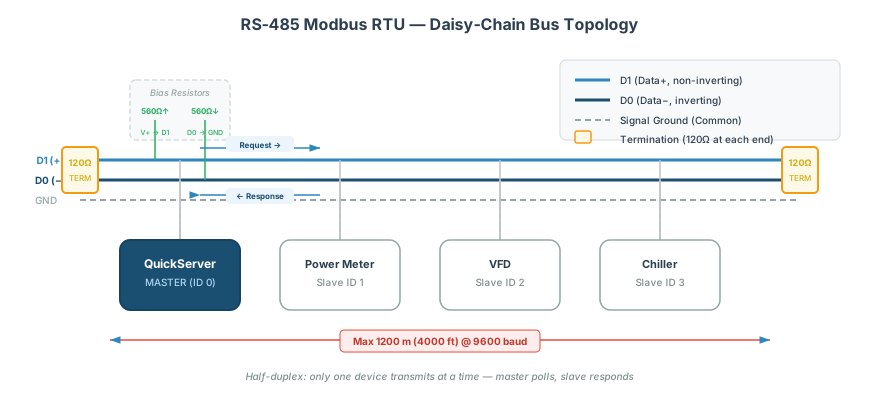
Key Characteristics
| Parameter | Value |
|---|---|
| Signal type | Differential (D+ / D-) |
| Max devices per segment | 32 with standard drivers |
| Max cable length | Approximately 1200 m at low baud rates |
| Topology | Daisy-chain bus |
| Common protocols | Modbus RTU, BACnet MS/TP |
Wiring Rules
- Daisy-chain only, not star wiring
- Terminate only at the two physical ends of the bus
- Keep polarity consistent across the trunk
- Use biasing where the design requires a defined idle state
[!CAUTION] Star wiring is one of the most common RS-485 installation mistakes and a leading cause of intermittent CRC and framing errors.
Common Problems
- Star or stub wiring creates reflections
- Missing or misplaced termination degrades signal quality
- USB serial adapter or driver issues delay bench testing