
What RS-485 Is
RS-485 (TIA/EIA-485) is a differential serial communication standard used as the physical layer for Modbus RTU and BACnet MS/TP. It supports multi-drop topologies (up to 32 devices per segment) over distances up to ~1200 m (4000 ft).
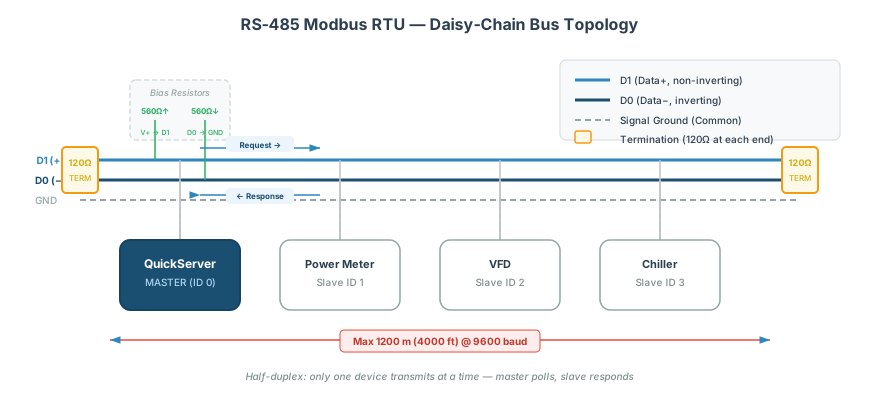
Key Characteristics
| Parameter | Value |
|---|---|
| Signal type | Differential (D+/D−) |
| Max devices per segment | 32 (standard drivers) |
| Max cable length | ~1200 m at 9600 baud |
| Topology | Daisy-chain (bus) |
| Common protocols | Modbus RTU, BACnet MS/TP |
Wiring Rules
- Daisy-chain only — no star or stub wiring (stubs cause signal reflections)
- Two wires — Data+ and Data− plus signal ground
- Termination resistors — 120Ω at both physical ends of the bus
- Biasing — pull-up on D+, pull-down on D− to define idle state
[!CAUTION] Star wiring is the #1 RS-485 installation mistake. Even short stubs cause signal reflections that produce intermittent CRC errors.
USB Adapters
For laptops without serial ports, a USB-to-RS-485 converter is required. See How to Install the Driver for the Abacus USB to RS232/485 Converter.
Common Problems
- Star or stub wiring — RS-485 requires a daisy-chain bus. Star topologies cause signal reflections that produce intermittent CRC errors, especially at baud rates above 19200. See Modbus RTU Pre-Commissioning Checklist.
- Missing or wrong termination — 120Ω resistors required at both physical ends of the bus only. Adding termination mid-bus degrades signal quality. See Modbus Troubleshooting Guide.
- No serial port / driver issues — USB-to-RS-485 adapters require the correct driver installed. See How to Install the Driver for the Abacus USB to RS232/485 Converter.